Contractor Invoice Template
Contractor invoices carry more than a total: they carry a claim against a job that is only partly finished, on which somebody is holding money back. This template is set up for how construction and trades actually bill — labour and materials separated, progress claimed against a contract value, change orders visible as change orders, and retainage shown rather than silently deducted.
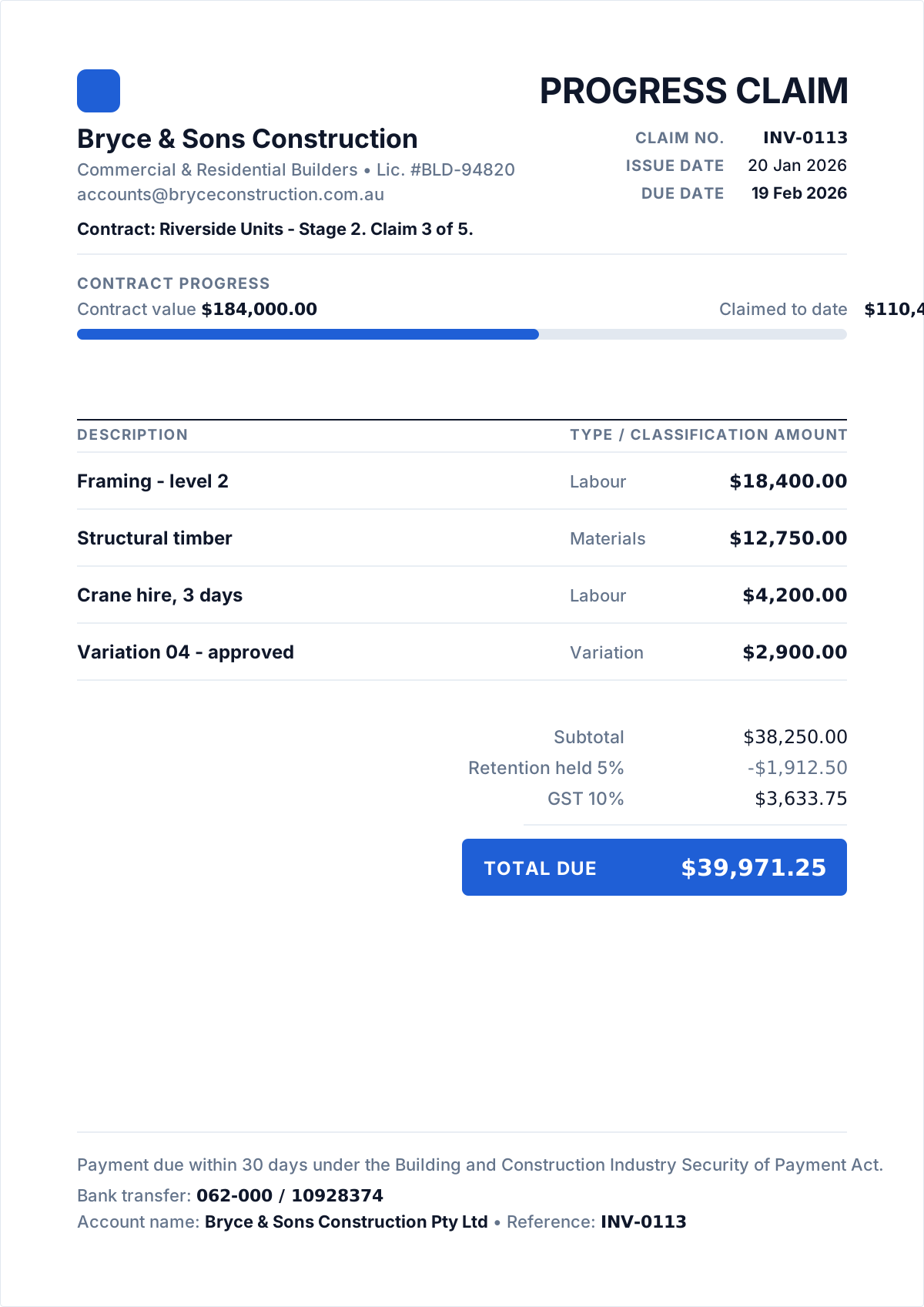
Labour, materials and equipment
Separate the three. A single “job total” line gives the client nothing to approve and gives you nothing to defend if the job is queried six months later.
- Labour — hours or days by trade and rate, with overtime on its own line at its own rate
- Materials — either itemised, or as a single supply line with the supplier invoices attached, depending on whether your contract is cost-plus or fixed
- Equipment and plant hire — the period hired, not the period on site
- Subcontractors — one line per trade, with the sub's scope named
- Disposal, permits and site costs — small, easily forgotten, and rarely recoverable once the final invoice is out
On a cost-plus contract, state the markup percentage on the invoice. A markup the client discovers by arithmetic becomes a dispute.
Progress billing
On anything longer than a few days, invoice against progress rather than at completion. The standard shape is a schedule of values: the contract broken into work items, each invoiced at the percentage complete this period. Show the contract value, the percentage claimed to date, the amount previously invoiced and the amount claimed now, so the client can check the arithmetic without a spreadsheet. Getting paid monthly on a six-month job is the difference between financing the client's project and being paid to work on it.
Change orders
Extra work invoiced as if it were part of the original contract is the fastest way to lose a payment argument. Every variation gets a written change order approved before the work, and its own clearly labelled line on the invoice referencing the change order number and date.
- Number change orders sequentially and reference the number on the invoice line
- Price them the same way as the base contract — do not switch from fixed to hourly mid-job without saying so
- Invoice approved variations in the period they are done, not saved for the end
- Never start a variation on a verbal instruction you have not confirmed in writing the same day
Retainage, deposits and final payment
Retainage — typically 5% to 10% held back until completion — should appear on the invoice as an explicit deduction line, so both sides know exactly what is being withheld and what triggers its release. A deposit taken before starting goes under amount paid on the final invoice, leaving the balance due as the only figure the client has to act on. When the job closes, invoice the retainage release separately and reference the completion date; an amount that has been held for months and never re-invoiced tends to stay held.
Where you have lien rights, the deadlines usually run from the last day worked or the last invoice — track those dates as carefully as the money.
Frequently asked questions
What should a contractor put on an invoice?
Your business name, address, contact details and licence or registration number where required, the client's name and the job site address, a unique invoice number, issue and due dates, labour and materials on separate lines, any approved change orders with their numbers, the contract value and percentage complete if you are billing progress, retainage held, any deposit already paid, tax, and the balance due with payment details.
How does progress billing work on a contractor invoice?
You break the contract into a schedule of values, then each period invoice the percentage of each item completed. The invoice shows the total contract value, the value completed to date, the amount already invoiced in previous periods, and the amount now due. This lets the client verify the claim against what is physically built rather than taking the total on trust.
Should materials be marked up on a contractor invoice?
On a fixed-price contract the markup is already inside the price and needs no separate disclosure. On a cost-plus or time-and-materials contract the markup percentage must be stated on the invoice, because the client is entitled to see the cost base you are applying it to. Undisclosed markup on a cost-plus job is the most common cause of a contractor payment dispute.
What is retainage and how do I show it on an invoice?
Retainage is a percentage of each payment — commonly 5% to 10% — that the client holds back until the work is complete and any defects are corrected. Show it as an explicit deduction line beneath the subtotal, not as a quiet reduction in the amount claimed, and invoice its release as a separate final invoice once the release condition has been met.
How do I invoice for extra work not in the original contract?
Get a written change order approved before doing the work, give it a number, and invoice it as its own line referencing that number and date. Extra work folded into existing line items looks like overcharging even when it is not, and a variation with no written approval is very difficult to collect.
How much deposit can a contractor ask for?
Enough to cover materials and mobilisation without financing the whole job — commonly 10% to 33%, and often capped by law or by trade licensing rules in residential work, so check the limit where you operate. Invoice the deposit separately before starting, then record it under amount paid on the final invoice so the balance due reflects only what is outstanding.
Ready to invoice?
Fill in the generator, download the PDF, and send it. No signup, no watermark, and your details stay in your browser.
Create your free invoice