Freelancer Invoice Template
Freelancers get paid by clients who have no payroll relationship with them, which means the invoice is the only document standing between finished work and money in the account. This template is set up for how freelance work is actually billed: by the hour, by the day, by the project, or by milestone — with a deposit already accounted for and a due date the client cannot misread.
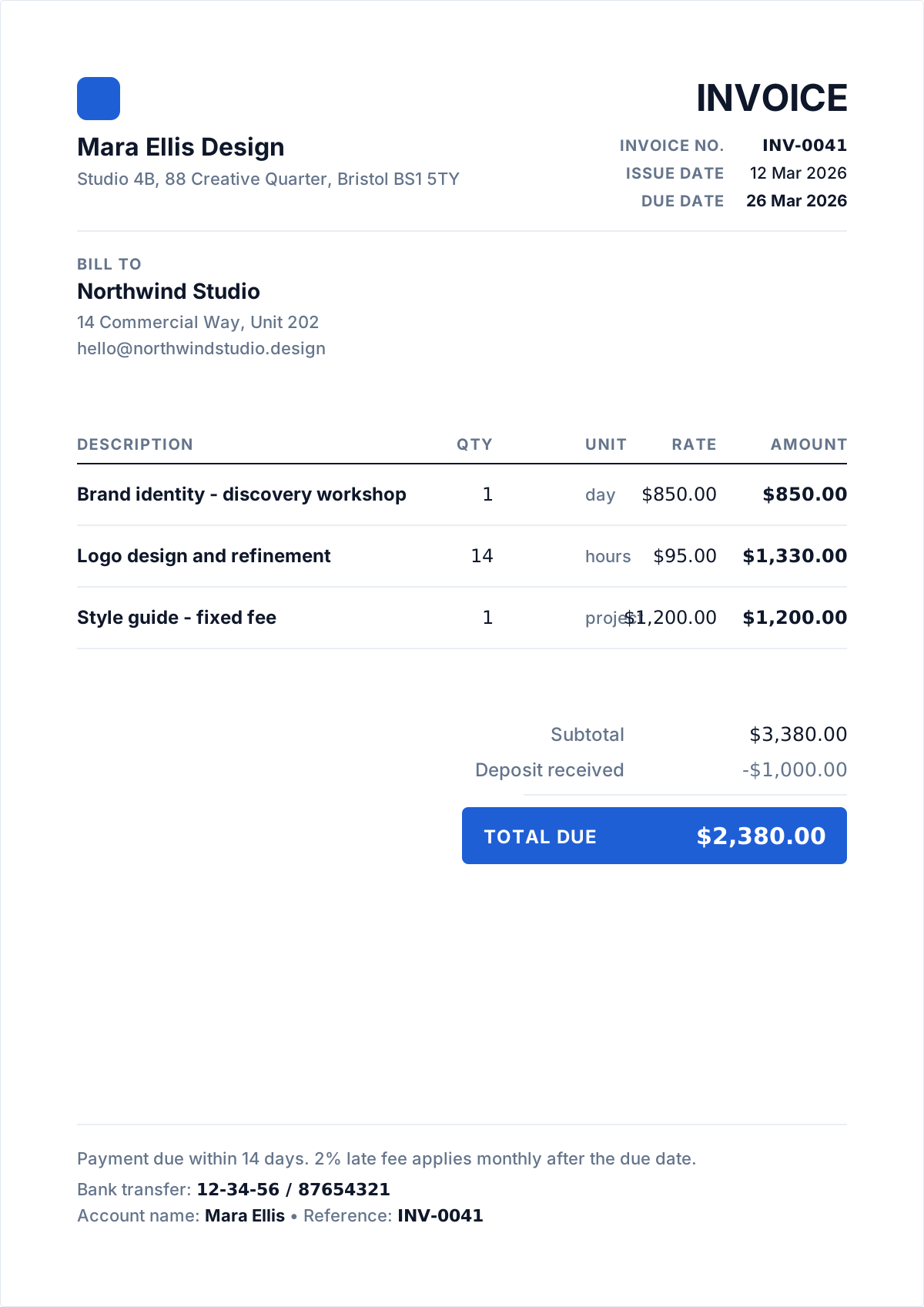
How to bill for freelance work
Pick one billing basis per invoice and make the unit visible on every line. Mixing an hourly line with a fixed-fee line is fine; leaving the client to guess which is which is not.
- Hourly — put the hours in the quantity field and your rate in unit price, with the unit set to “hour”. Attach or summarise a time log if the client is paying from a timesheet.
- Day rate — same, with the unit set to “day”. Say in the description what a day means if it is not eight hours.
- Fixed project fee — one line with quantity 1, the unit price as the whole fee, and a description that names the deliverable.
- Milestone — one line per milestone with the phase named (“Phase 2 — design handoff”), so a partial payment maps to something concrete.
- Retainer — one line covering the period, with the dates in the description, invoiced at the start of the period rather than the end.
Deposits and staged payments
For anything longer than a week or larger than you can afford to lose, invoice a deposit up front — 25% to 50% is normal — and start work only when it clears. On the final invoice, enter the deposit under amount paid so the total shows the full value of the work and the balance due shows only what is outstanding. Netting the deposit out of the line items instead hides the real project value from your own records.
Payment terms that actually get honoured
State a date, not a duration. “Due 14 March 2026” is unambiguous in a way that “Net 14” is not, because Net 14 leaves open whether the clock started at issue or at receipt. If you charge a late fee, the invoice must say the rate before it is late — a fee introduced in the chase email is not enforceable in practice.
- Issue the invoice the day the work is accepted, not at the end of the month
- Show the due date next to the total, where the eye lands
- Include the bank details or payment link on the invoice itself, not in the email body
- Reference the client's purchase order number if they use one — accounts payable will bounce the invoice without it
Tax on freelance income
Nobody withholds tax on your behalf. In the United States, clients paying a freelancer $600 or more in a year issue a 1099-NEC and you owe self-employment tax on top of income tax, so setting aside roughly a quarter to a third of each invoice is a survival habit rather than a preference. If you are registered for sales tax, VAT or GST, the registration number and the tax charged must appear on the invoice — the generator has fields for both, and the tax label is editable.
This is general information, not tax advice. Thresholds and rates change and depend on where you are.
Frequently asked questions
What should a freelancer put on an invoice?
Your name or trading name and contact details, the client's name and address, a unique invoice number, the issue date and due date, a line per piece of work with quantity, unit and rate, any deposit already paid, the total due, and how to pay. Add your tax registration number if you have one, and the client's purchase order number if they use one.
Do I need a business name to invoice as a freelancer?
No. Invoicing under your own legal name is completely normal for sole traders and sole proprietors, and it is what most freelancers do before they register anything. Use the name your bank account is in, so the payment reference matches.
Should I invoice hourly or a fixed fee?
Hourly protects you when the scope is unclear and the client keeps changing direction. A fixed fee pays you better when you are fast and the deliverable is well defined, and it is easier for a client to approve because it caps their exposure. Many freelancers quote fixed for the defined work and hourly for anything outside it, which is what a change-order line on the invoice is for.
How do I charge a deposit on a freelance invoice?
Send a separate deposit invoice before starting, for the agreed percentage, then on the final invoice list the full work as normal and record the deposit under amount paid. The balance due then shows only what is still owed, and both invoices together document the whole project value.
What do I do when a freelance client does not pay?
Send a short, factual reminder the day after the due date, quoting the invoice number and the amount. Follow up weekly. If the invoice is with a company, ask to be put in touch with accounts payable directly rather than going through your day-to-day contact — most late payment is process failure, not refusal. Keep every reminder in writing; that record is what makes a formal demand or a small-claims filing straightforward later.
Can I add a late fee to a freelance invoice?
Yes, provided the rate was agreed in your contract or stated on the invoice before it became overdue. A common approach is 1.5% per month on the outstanding balance. Add it in the notes field so it is visible on the original invoice, not just the chase email.
Ready to invoice?
Fill in the generator, download the PDF, and send it. No signup, no watermark, and your details stay in your browser.
Create your free invoice